2015年12月13日日曜日

About My Book 4

     Hello. Today, I want to tell you about chopsticks. Japanese may use them almost every day.

     According to the book I am reading, “A pair of chopsticks is the only utensil used to wat Japanese food. Even in the case of a multi-course meal, the same pair of chopsticks will be used throughout the meal”.
     Moreover, we can learn how to use chopsticks in this book.

     1.    Put one chopstick at the base between the index finger and the thumb, using the ring finger to support the lower part (skinner side) of the stick.

     2.    Use the tips of the thumb, index and middle fingers to hold the other stick like a pen. Now the tip of the middle finger is between two sticks.

     3.    Pivot the upper stick up and down towards the stationary lower stick.

     At first, it is difficult for some people to use chopsticks. However, I am sure that if you try again and again, you will be able to use them well.

     There are some important points you should keep your minds.
One is that never stick chopsticks upright into rice. Chopsticks standing up in a bowl is bad luck related to death in Japanese superstition.
Two is that never transfer food from one pair of chopsticks to another. In Japanese funerals, surving relatives pick up and transfer bones after the cremation into the urn in this way.
Third is that not to use chopsticks to move bowls or plates and not to pierce food with chopsticks.

     I hope chopsticks will be more and more prevailed. And I want more foreigners to try to use them.    

2015年12月8日火曜日

Recent Eating Report 3

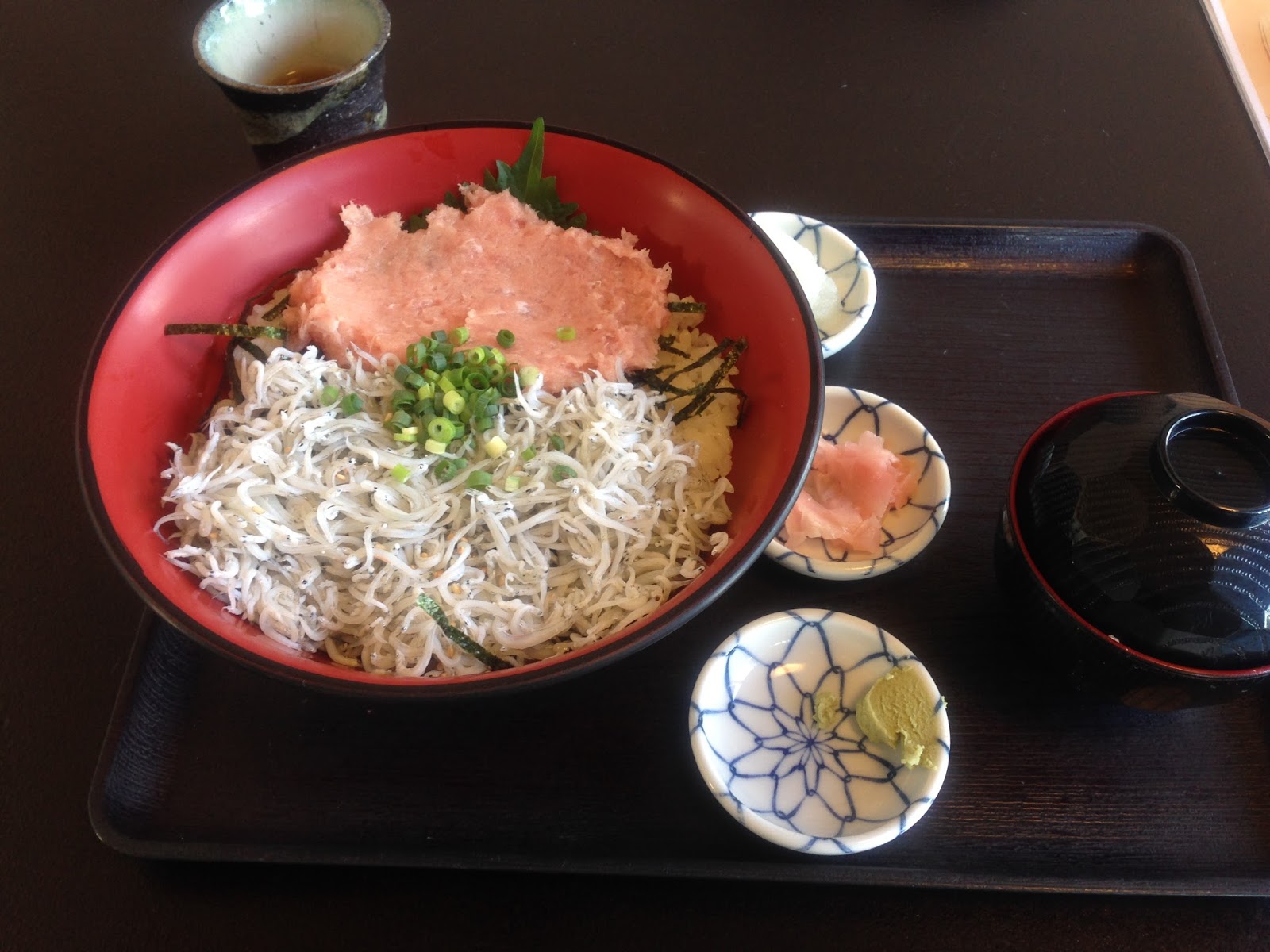
     The other day, I went to Enoshima with my friends. Enoshima is a tied island protruding into Sagami Bay from the Shonan coast in Fujisawa, Kanagawa Prefecture. And it is famous for delicious food from sea. So we ate Kaisendon at Fujinami (藤波). Fujinami is one of the most famous stores in Enoshima. Kaisendon is rice with the young of sardines and onion and raw tuna mince.


      Then, the atmosphere of the store was calm. And the seat we sat on was the drawing room (座敷). We could feel relaxed.
      The price of Kaisendon was 1600 yen. Other menus were also about 1000~2000 yen. It seems relatively a little bit expensive, however, we could choose ingredients freely for Kaisendon. So I think it offsets the price.
      I recomend for all seafood lovers to visit Enoshima and Fujinami. Moreover, if the weather is good, we can see beautiful Mt. Fuji. When I went there, the weather was very good and I could see beautiful landscape and take this picture.


*If you want to go or know about this store (Fujinami) more, please look at this site.  
 →http://www.cityfujisawa.ne.jp/~shouten/shop/eno012/eno012.html


2015年12月1日火曜日

Food for All and Second Harvest Japan


・What are their main activity/events?


Food for All

→Food Bank activity (intermediate food surplus and food shortage)

Second Harvest Japan

→Food Bank activity, the support for the Great East Japan Earthquake or Harvest Kitchen (the activity to provide hot food for homeless people).


・How do they deal with the problem of food waste?

Both Food for All and Second Harvest Japan do Food Bank activity.

In Food Bank activity, it is dealt with processed food such as canned goods, fresh foods such as vegetables or fruits, disaster prevention stockpile, grains such as rice or bread and frozen foods. They cope with food manufacturer, wholesalers and importers and urge them to donate surplus food.

There are a lot of merits. For example, one of them is that it is possible to reduce the number of food waste. Another one is that it is good for the environment.

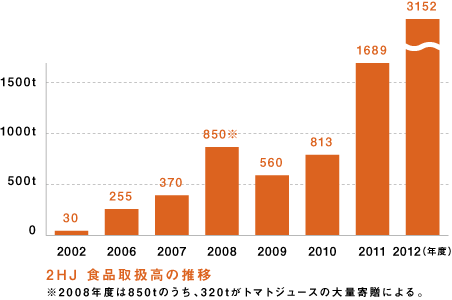
Actually, the number of dealing food is increased to 3152 tons in 2012.


・How would you be able to help/volunteer for these organizations?


First, I can donate money. According to the Second Harvest Japan, if I donate 1000 yen, it is possible to provide ten times the amount of money equivalent foods.

Second, I can donate foods. What we can donate is the same as what is dealt in Food Bank activity.

Third, I can donate time. Many kinds of activities are introduced such as packaging, delivering or distributing foods. Everyone, who is over 12 years old, can participate. There are many things we can do and it seems to be the easiest donation to try of all these three.


・Which group seems to be the most active?

I think it is Second Harvest Japan. It is because various kinds of activities are reported. Once we see their site, we can understand the concrete number and their activities in detail.

2015年11月30日月曜日

Newspaper Article

 
I chose the article “For Pets, It’s Fat Thursday With Pies, Dressing Under the Table”. Actually, I don’t have pets in my house and I am not good at animals. However, this time, I want to know about pet well.
 
In this article, it is said that recent pets are apt to be obesity. It is because they eat high-calorie food. Owners give pet food freely. This has been paid attention as a problem. In my opinion, it is natural that pets want to choose and eat their food freely as the same as human do. We also sometimes tend to choose our eating habit without considering our health. Many delicious foods have a high-calorie.

 
But when we see the future, our eating habits are very important. Eating habits make our body. So pet owners should choose and restrict their food for their future. High-calorie food should be given occasionally.


2015年11月26日木曜日

Result of the Food Quiz

 
I mistook 6 questions.
First one was “What is foie gras?” The correct answer is “The liver of a duck or goose that has been fattened a certain way”.
Second one was “Which fork is the salad fork?” The correct answer is “It’s usually the outermost fork to the left of the plate”.
In this site, we can learn more about western dishes.
Third one was “What is allspice?” The correct answer is “A special spice, usually found in South America or the Caribbean, which tastes like a mixture of cinnamon, nutmeg, and cloves”.
Forth one was “Which is not technically a berry?” The correct answer is “Strawberry”.
This was the most surprising. It was the first time I learned about the “berry”. I found out that “berry” simply means small fruits containing a lot of juice, not having a shell like nuts.
Here we can learn more about berry.
Fifth one was “What is prosciutto?” The correct answer is “Thinly sliced, dry-cured Italian ham”.
Sixth one was “What type of dessert is a Whoopie Pie?” The correct answer is “All of the above---It's bready, so it's a cake. It's filled with icing like an Oreo, so it's a cookie. It has pie in the name. It's definitely a pie”.
Through this quiz, I could get some new information of food.


2015年11月21日土曜日

About My Book 3

Hello. Today, I want to tell you about the etiquette and manners which are written in my book.
First point is “entering”.
When you enter Japanese house, you should take shoes off. Sometimes, waiters offer you a pair of slippers. You can use them except in a tatami room.
According to the dictionary, tatami is a straw-made floor and one of the bedding materials which are commonly used in Japanese-style room. The size is different depending on the religions, but usually, its size is in the 180cm×90cm inside and outside.

If you want to learn about tatami more, please look at this website.
→http://www.ehow.com/facts_5005759_what-tatami-room.html

Second point is “seating”.
In a tatami room, guests are most likely to be offered the upper position or kamiza. The kamiza is the space in front of the took-no-ma, the niche where flowers and art are displayed. The closer the position to kamiza, the higher the rank of the seat.
On casual occasions with friends, no one cares about formal positioning. However, for a formal business dinner, you should keep this basic positioning rule in mind.
Seiza is the formal way to sit in a tatami room.

Third point is “polite expressions for before and after eating”.
Japanese people say “Itadaki-masu” before they eat. It literally means “I’m going to receive”. On the other hand, they say “Gochisosama deshita” when they finish wating. It means “Thank you for the great meal”. These phrase show appreciation to the host and also express general gratitude for the food. I’ve been grew up in Japan and I also have been taught naturally to say these phrases.

We can learn some points of Japanese manners. Why don’t you try these?

2015年11月5日木曜日

Recent Eating Report 2

On November 3, Culture Day Holiday, I did Fuji-five-lakes-tour with my friends. The weather was very good.

And near Yamanaka Lake, we had lunch. I ate Hoto which is local cuisine of Yamanashi Prefecture. It is a kind of flour noodles with vegetables cooked in a soup of miso.


Which I ate was with many kinds of vegetables (carrot, Japanese white radish, burdock, Chanese cabbage, pumpkin and taro).
This was cooked in good stock and very delicious.
 
 
My friend ate a bowl of rice topped with tempura. Tempura is a typical Japanese cuisine which is fried seawood or vegetables dipped with mixture of flour, eggs and beaten juice.
.
 
 
Also many kinds of ingredient were used such as shrimp, squid, sweet potato, eggplant and lotus root.
We could enjoy eating Japanese traditional food.
 
It was a happy and wonderful day(^○^)